Roman Ondak
Video Killed the Radio Star: The 1980s and their Cultural Echoes
- MUDAM - The Contemporary Art Museum of Luxembourg (LX)
- 12.06.–11.10.2026
On the occasion of Mudam’s twentieth anniversary, Video Killed the Radio Star reflects the collection’s longstanding and formative engagement with the period. By revisiting this decade and tracing its reverberations, the exhibition explores how the transformations of the 1980s still inform the present. In dialogue with contemporary history, it invites viewers to question what is often overlooked by Western art history. From this standpoint, the exhibition incorporates more recent artistic practices, as well as archival material, to develop a broader argument around the 1980s. The encounters resonate across generations in a critical re-examination of the era’s cultural preoccupations and aesthetic forms and reveals their persistence into the present. Critical engagement with photography and cinema spans the exhibition, moving from staged portraiture and institutional spectatorship to the mediated construction of historical events.
The exhibit is divided into two sections. The first examines how artists from the 1980s and today have challenged dominant regimes of representation in photography, painting and fashion, as well as through practices of institutional critique. The second turns to the geopolitical and media transformations of the end of the decade, from the collapse of communism to an emerging globalisation in which the concepts of the centre, periphery and marginality grew increasingly complex. The two sections are connected by the Foyer, an interstitial space built from archival material which plots the transition from mass consumerism to the attention economy.
Video Killed the Radio Star is a portrait of the 1980s as a cultural turning point and origin of contemporary technologies, contradictions and desires. It invites us to consider what remains of that era now, what is relevant from it in today’s algorithmically shaped information environment, in internet-mediated intimacy and post-truth politics and to trace how the visual codes and political undercurrents of the 1980s have informed intersectional interpretations of postmodernism. Ultimately, the exhibition approaches the decade as an unfinished project whose images and vocabulary continue to organise perception, belief, ideology and power.
Curators:
Bettina Steinbrügge, with Caroline Honorien and Alexine Taddeï
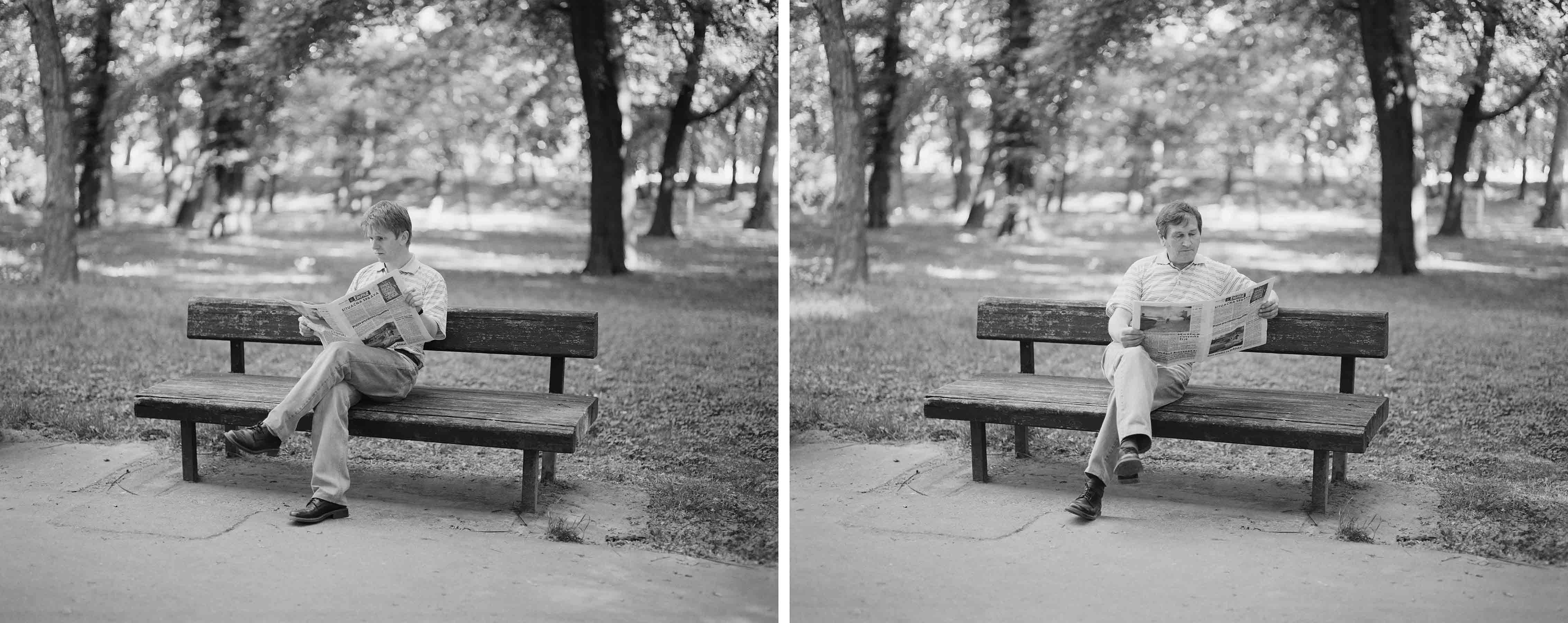
Roman Ondak, Bad News is a Thing of the Past Now, 2003
fine art pigment prints on Hahnemühle photo rag ultra smooth, 2 parts, each 140 x 175 cm