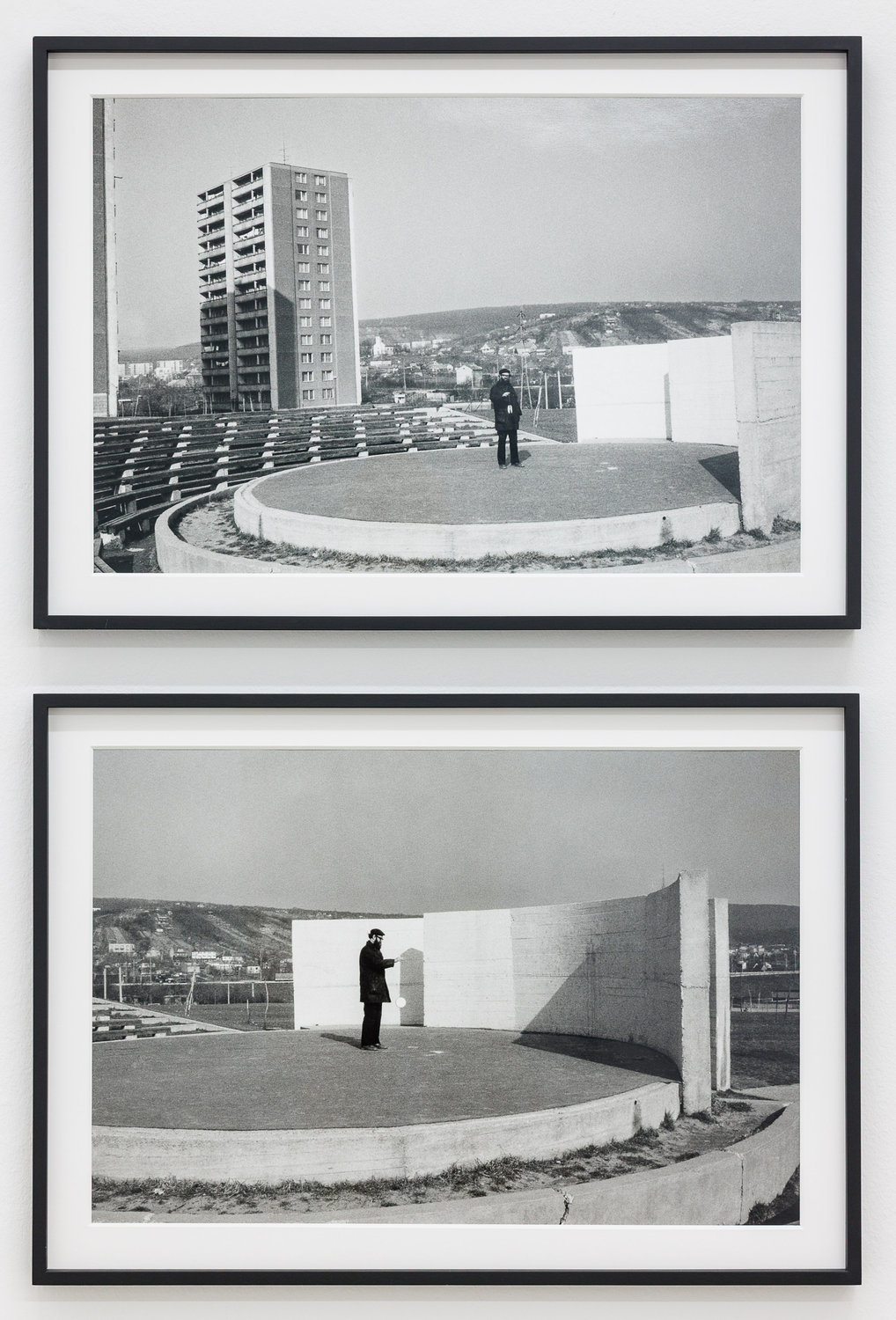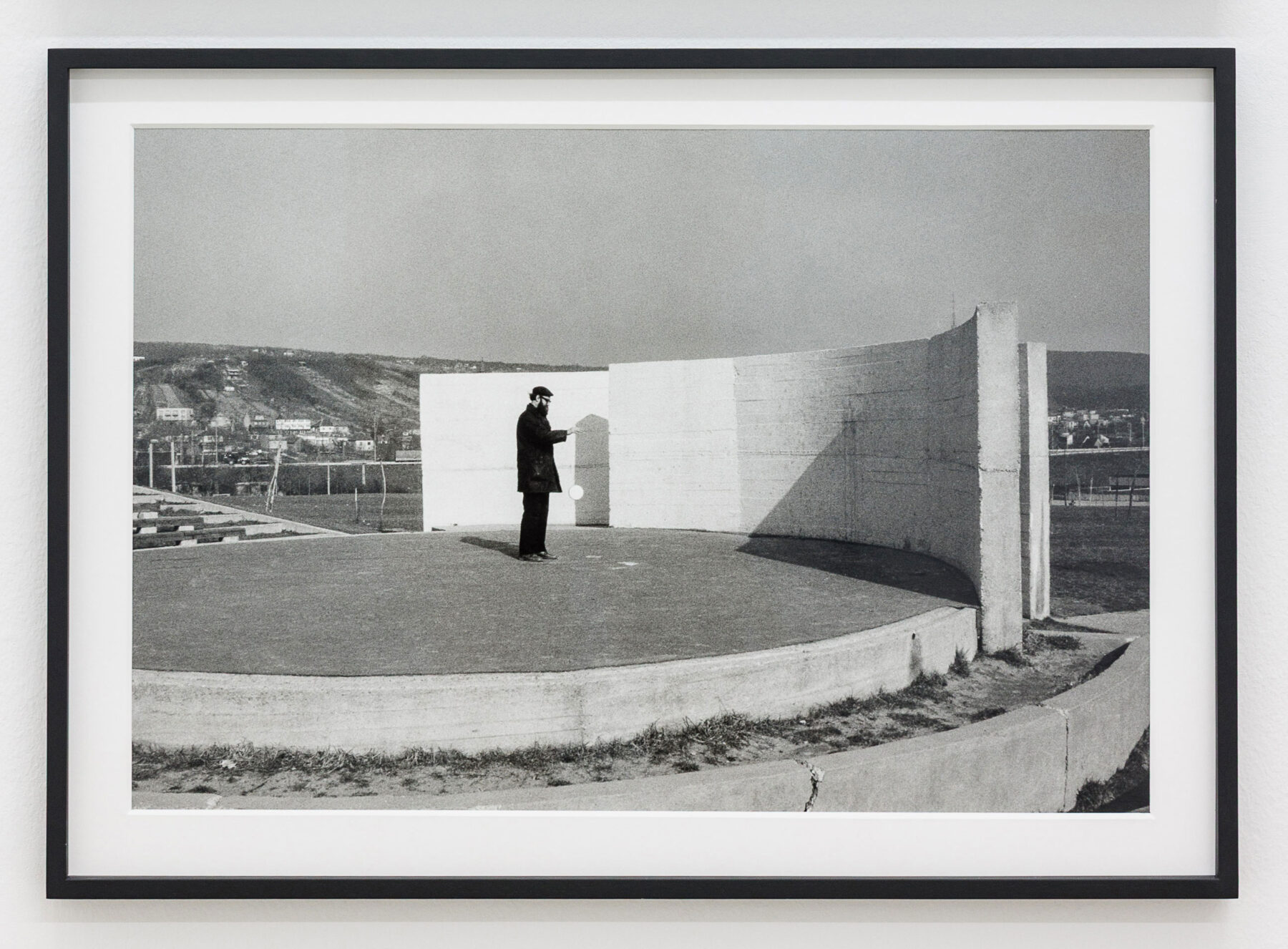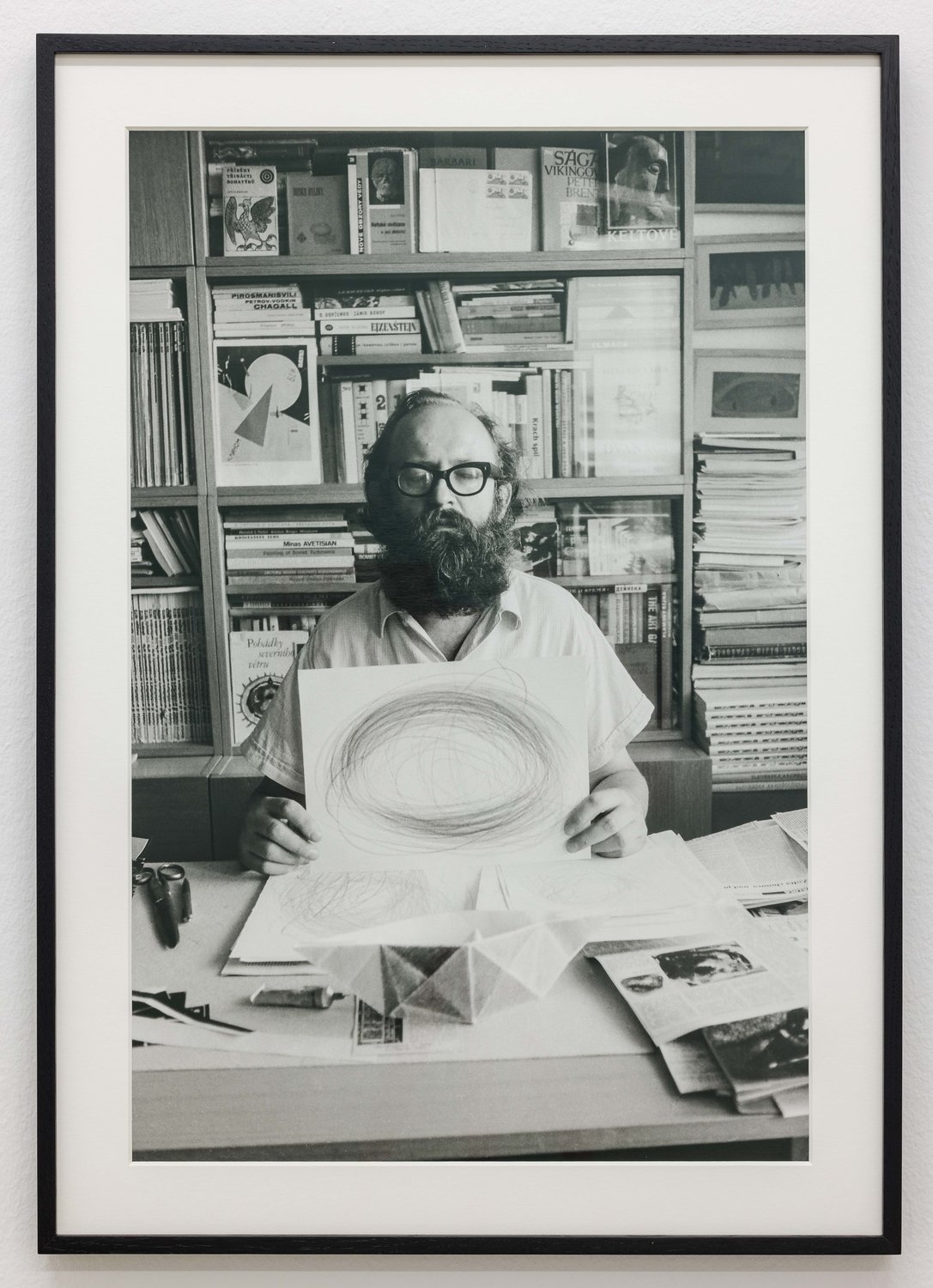
Július Koller, Meditácia / Meditation (U.F.O.), 1983
b&w photograph, 57 × 38 cm, Edition 1/6
Opening: 12.05.2026, 6–9 pm
Galerie Martin Janda is showing Július Koller's fifth solo show from 13th May to 4th July 2026.
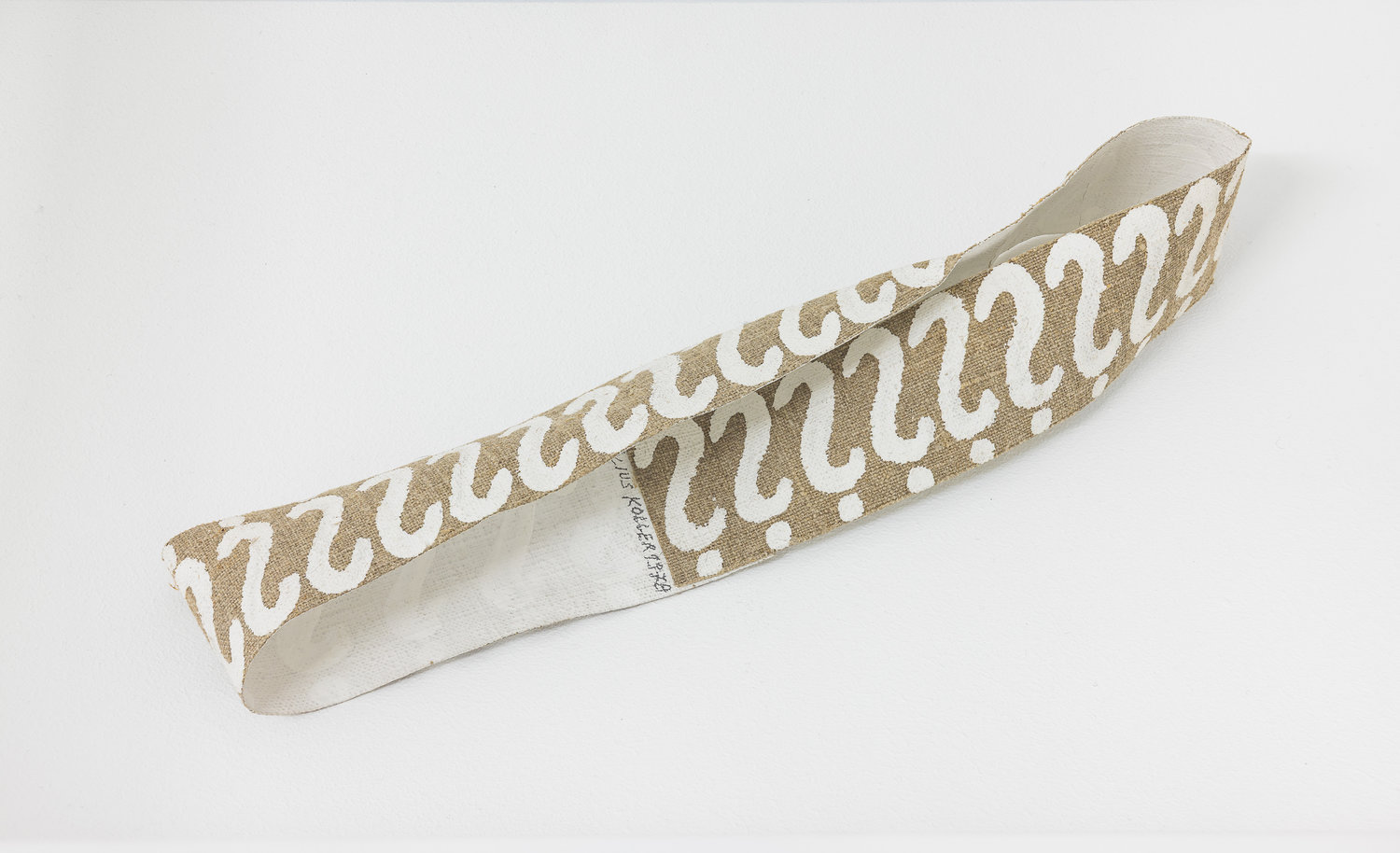
In the political climate of 1968 and 1969, the question mark (Otáznik) became a central motif for Július Koller, which he developed in various forms into an essential component of his work. The invasion of Czechoslovakia by Warsaw Pact troops and the abrupt end to the Prague Spring’s process of liberation had a decisive influence on this approach. For Koller, the question mark became an expression of a constant questioning of situations, objects and life itself.
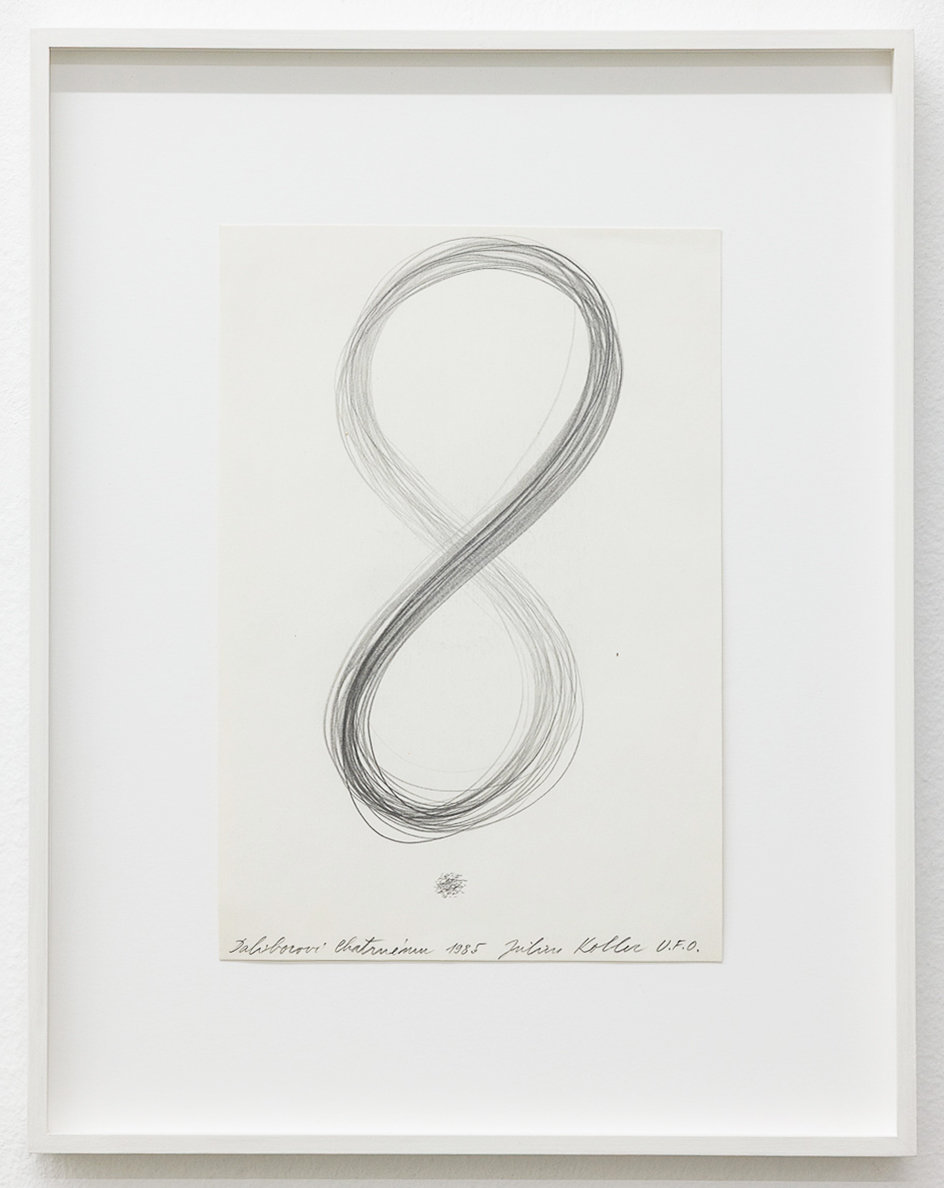
At the same time, Július Koller developed the symbol further: it transformed into duplicates reminiscent of a Möbius strip, revealing an infinite, playful form of doubt and questioning.
Koller applied this strategy across a wide variety of materials and contexts. For instance, he translated the ornamental forms of the painted decoration on traditional wooden houses in the High Tatras into an ornamental sequence of question marks, executed using the same artisanal technique. The symbol served not only as a reference to a society, politics or the personal environment that were to be questioned but was conceived more universally: it stood equally for playful openness as well as for doubt, mistrust and general uncertainty.
“I have tried to resolve the contradiction between utopia and real life,” Koller once explained. This approach is also evident in a simple pencil drawing he dedicated to his colleague Dalibor Chatrný. In it, the question mark transforms into a loop and returns to itself. Through the repeated use of the dot beneath the curved form, the artist subtly alludes to the original act of questioning.
In the photographic work Meditácia / Meditation (U.F.O.) (1983), Július Koller is seen with his eyes closed, his glasses perched on his head, holding what appears to be a circle drawn blindly. Here, too, the very possibility of free expression becomes the subject of inquiry, one that focuses not only on social conditions but also on one’s own capacity for perception and action.
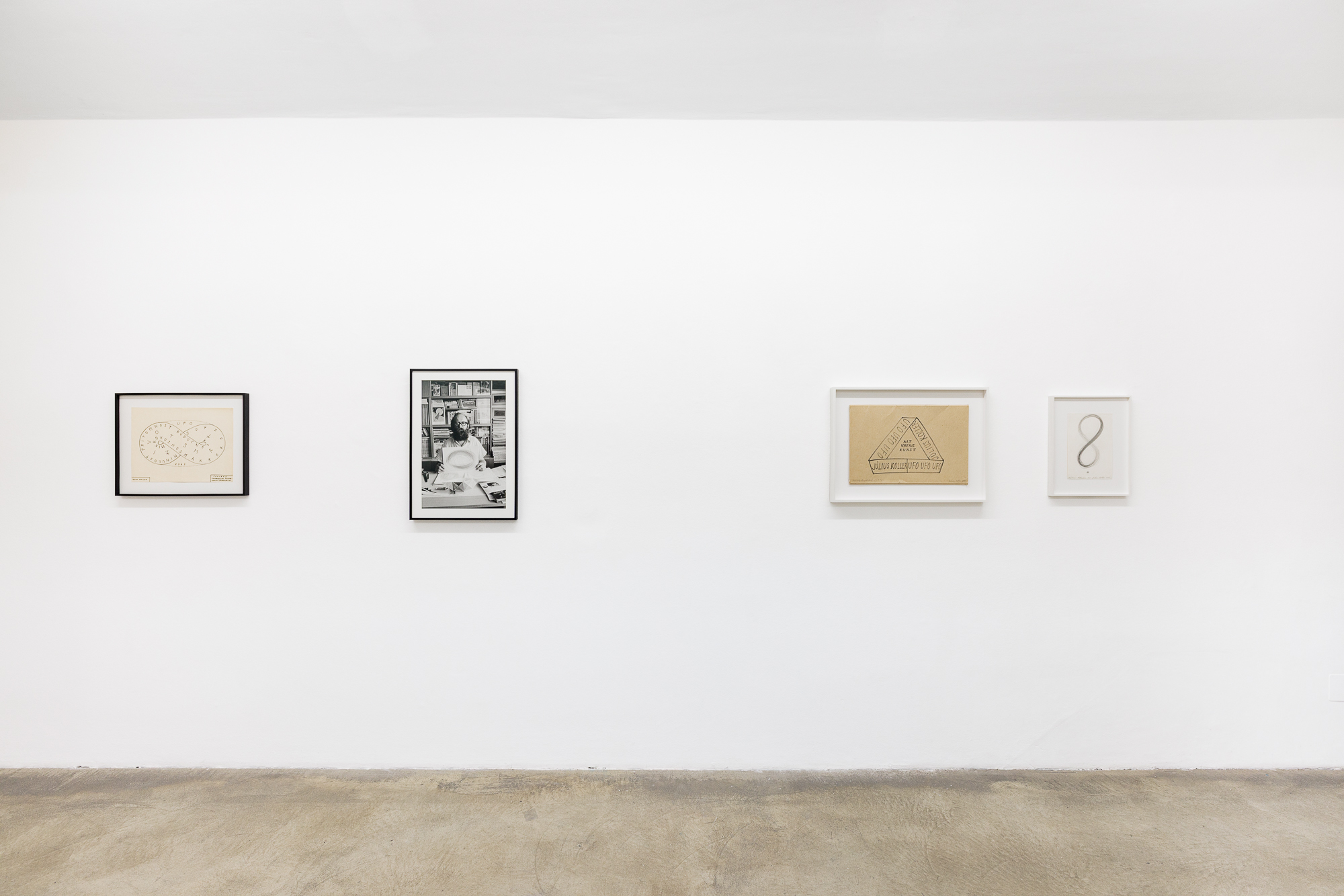
Exhibition view, Galerie Martin Janda, 2026
Photo: kunst-dokumentation.com
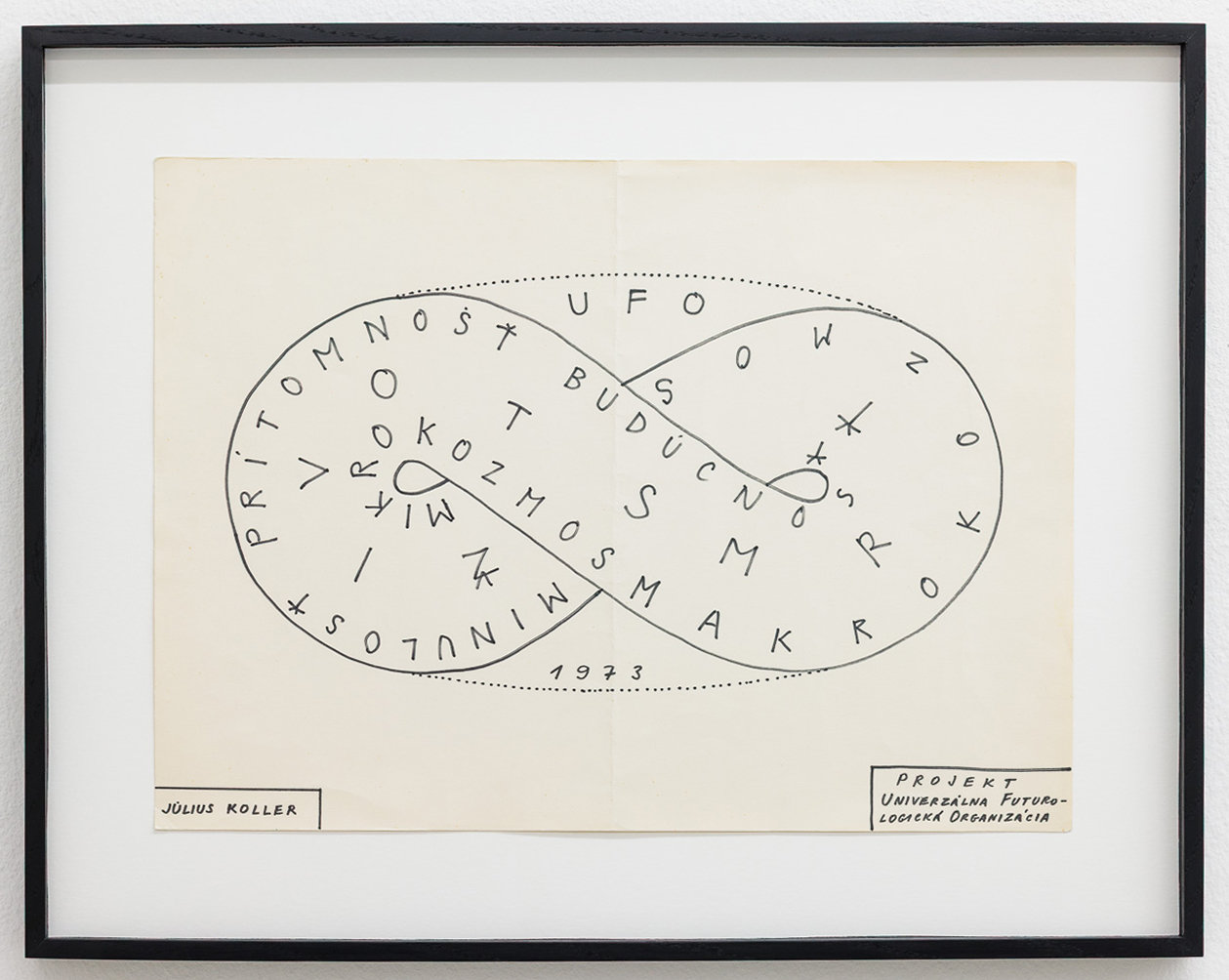
Július Koller, Projekt Univerzálina Futuro - Logická Organizácia, 1973
felt-tip-pen on cardboard, 33 × 45 cm
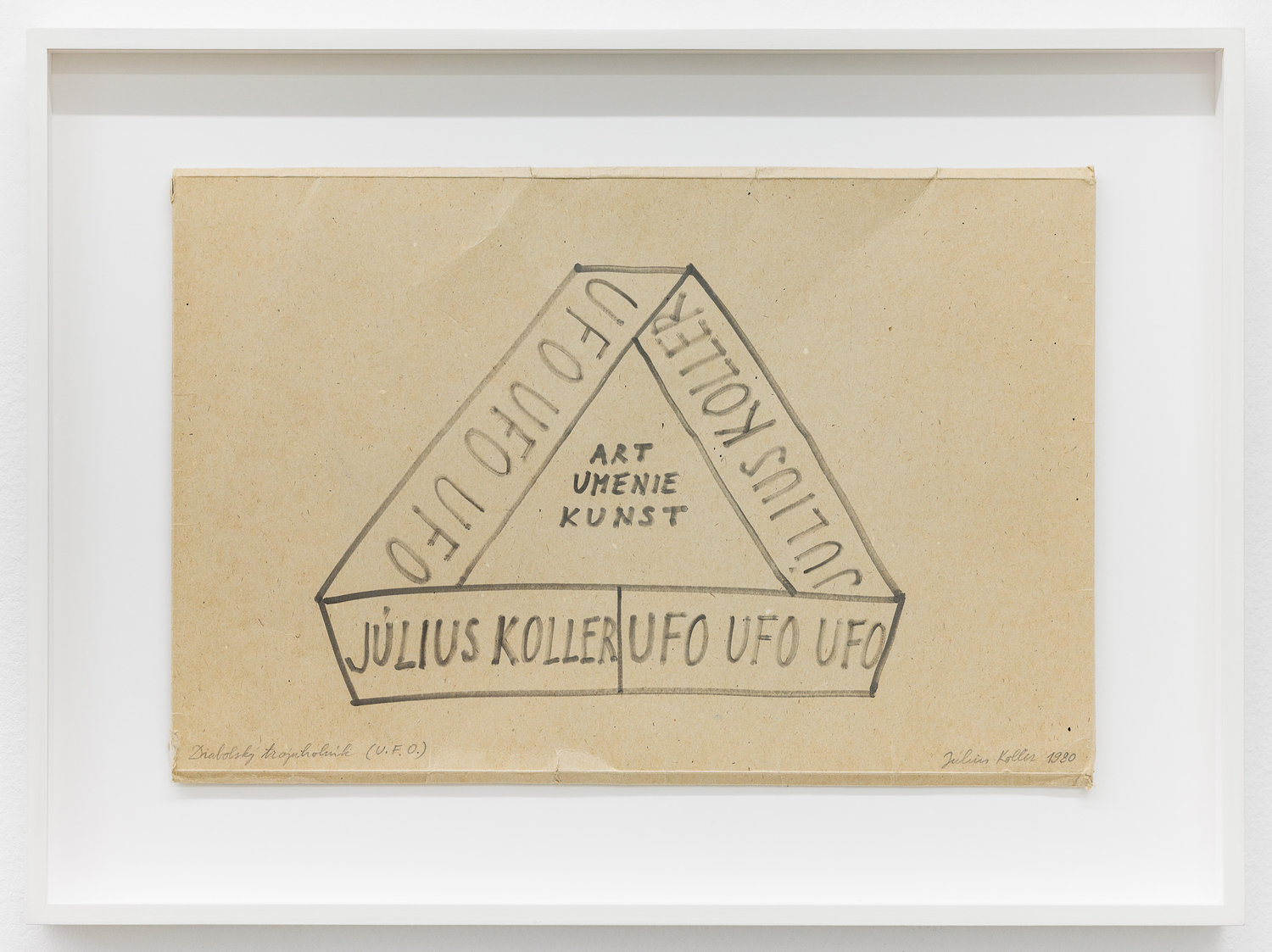
Július Koller, Diabolsky Trojuholník (U.F.O.), 1980
pencil, pen on cardboard, 34.5 × 52.5 cm
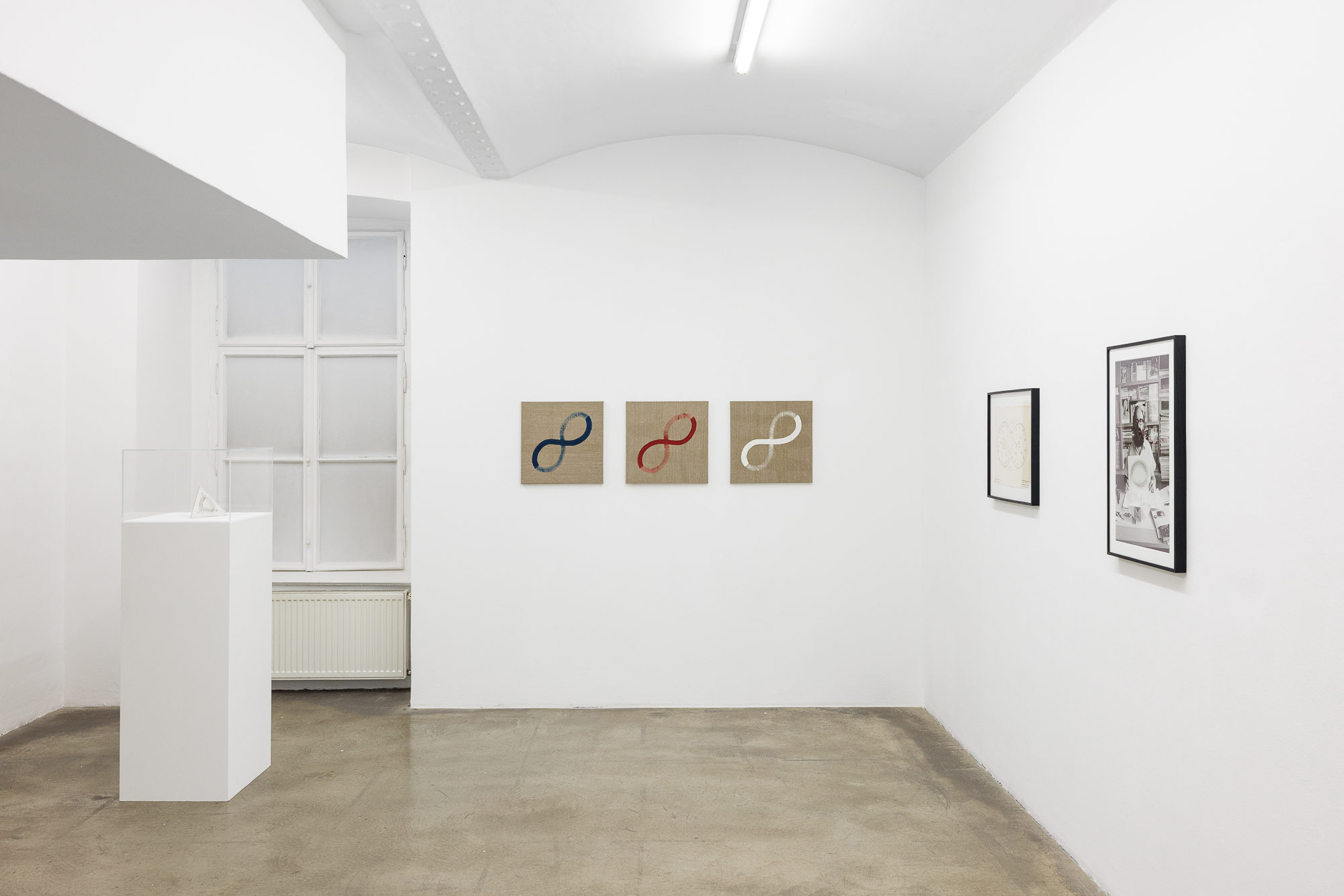
Exhibition view, Galerie Martin Janda, 2026
Photo: kunst-dokumentation.com
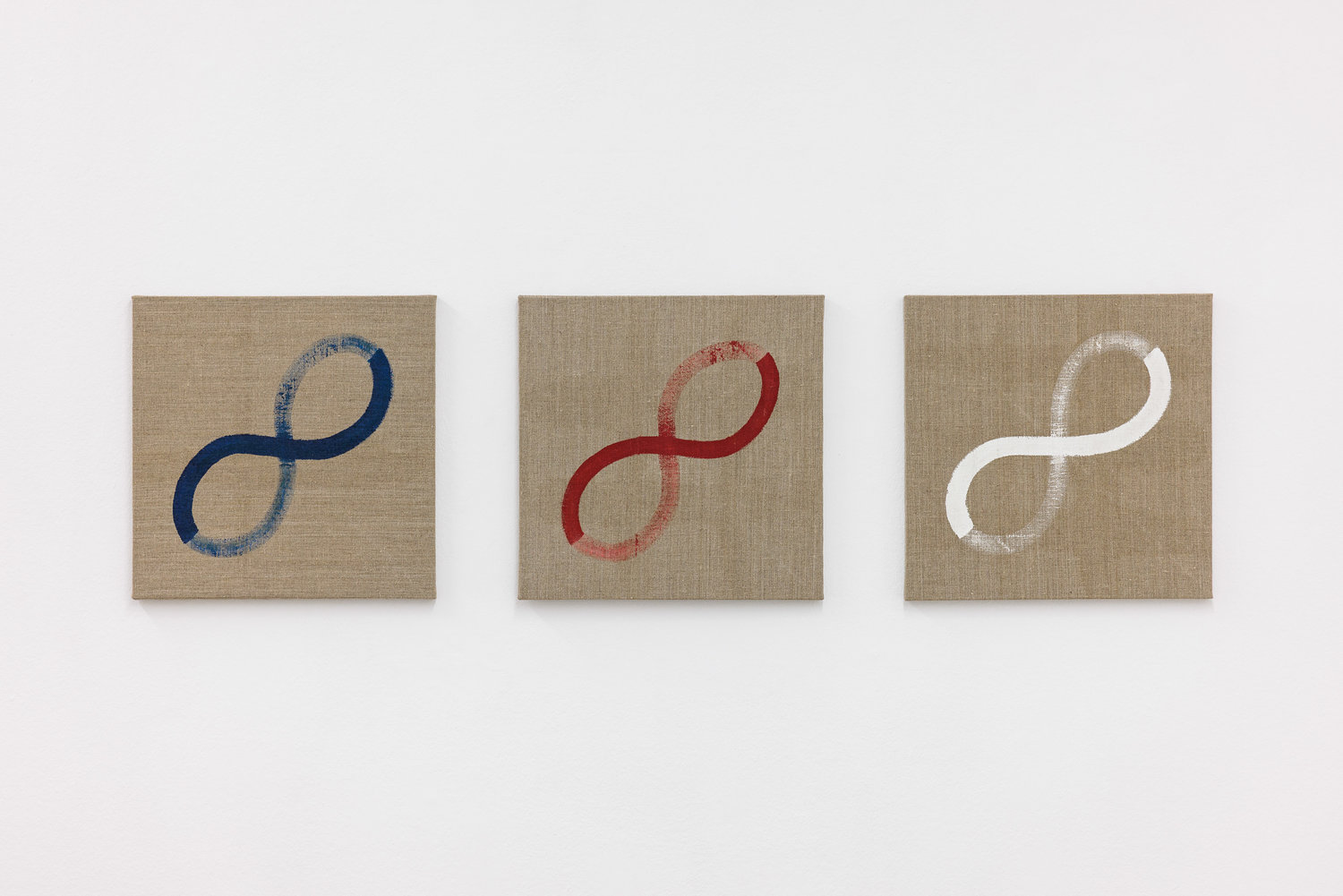
Július Koller, Untitled, ca. 1989
latex on canvas, 3 parts, each 45 × 45 cm
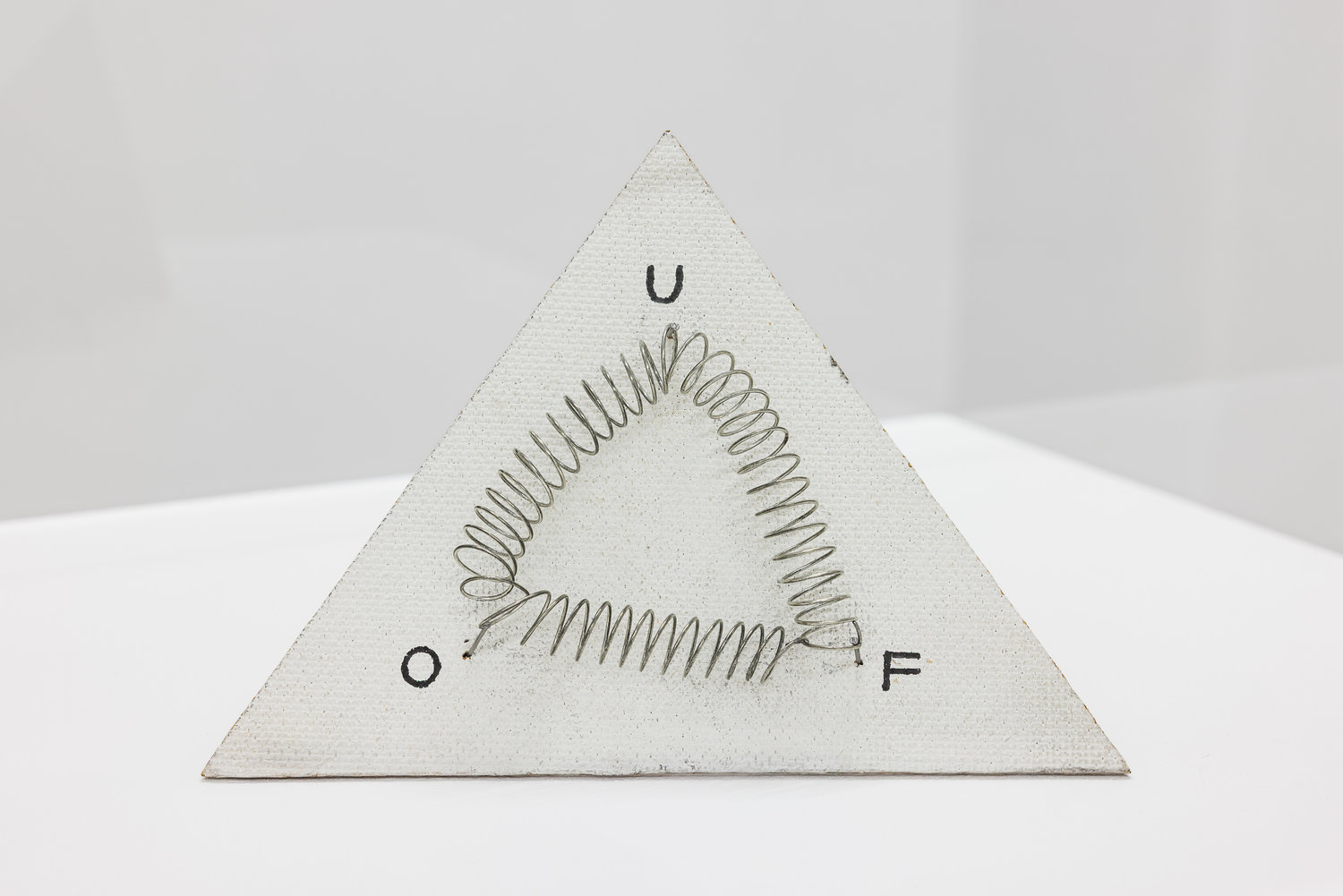
Július Koller, Univerzálny Futurologický Objekt (U.F.O.) / Universal Futurological Object (U.F.O.), 1978
felt-tip-pen, wire, latex paint on hardboard, 14.5 × 20 × 2 cm
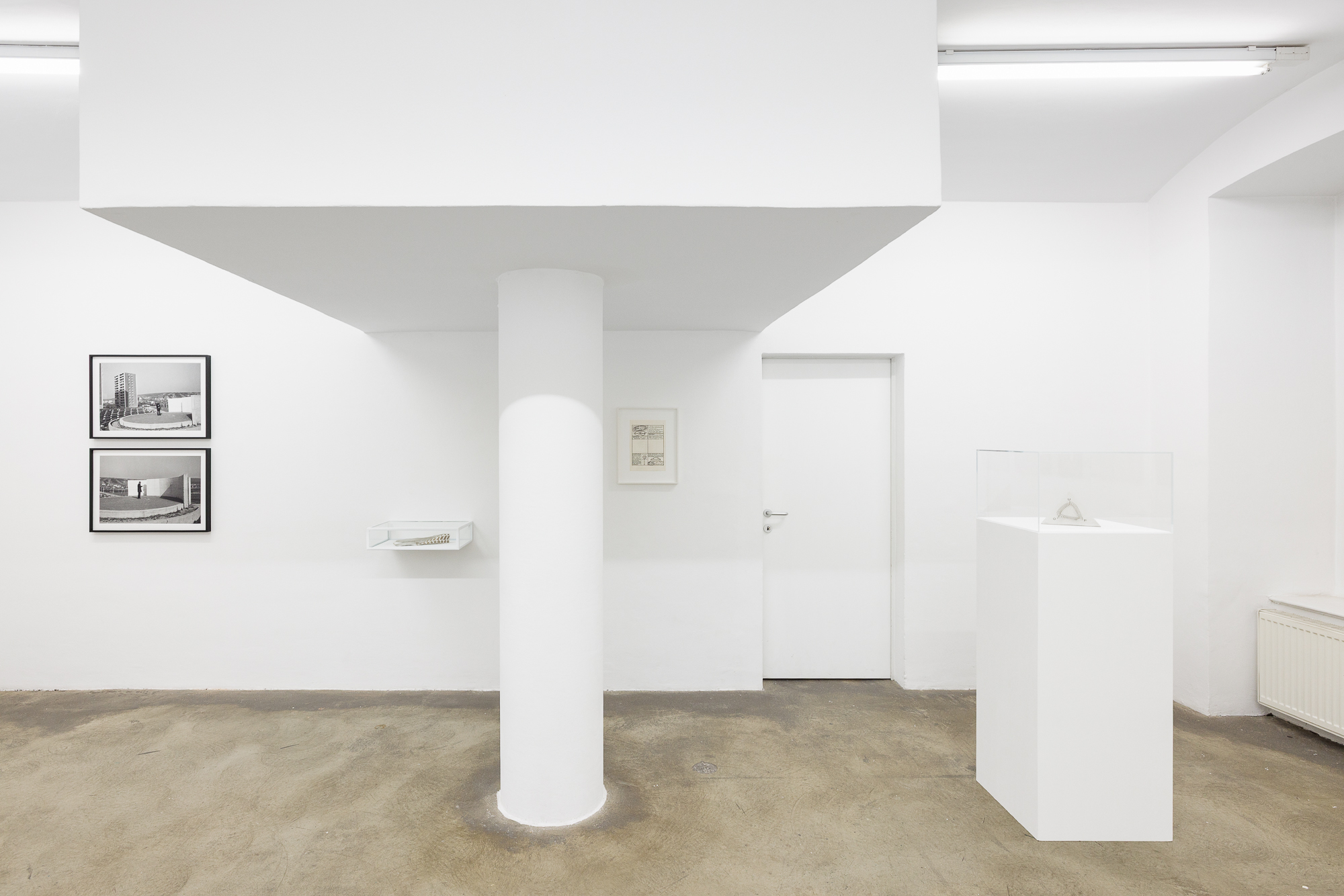
Exhibition view, Galerie Martin Janda, 2026
Photo: kunst-dokumentation.com
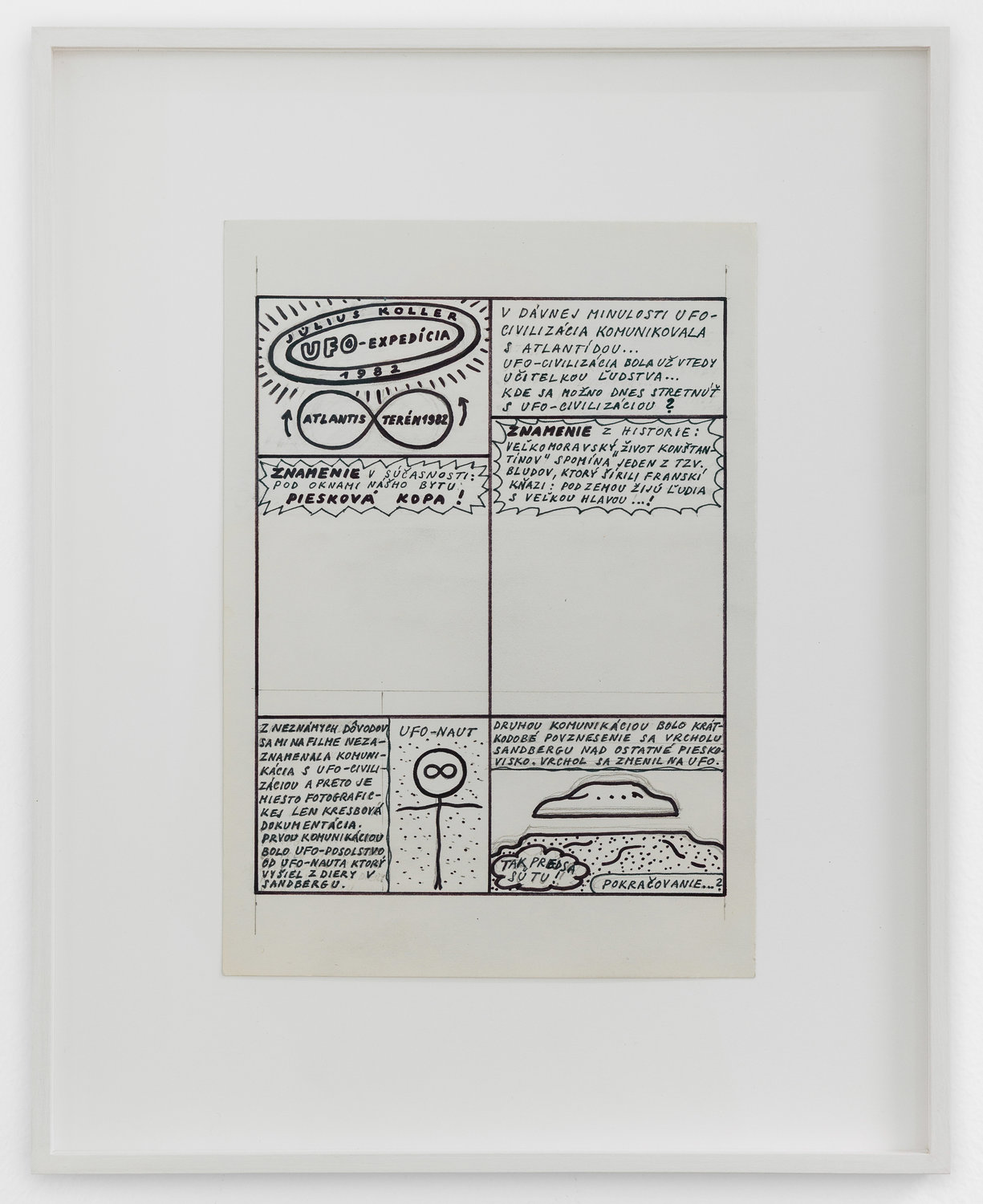
Július Koller, U F O Expedícia, 1982
felt-tip-pen, pencil on paper, 29.8 × 21 cm
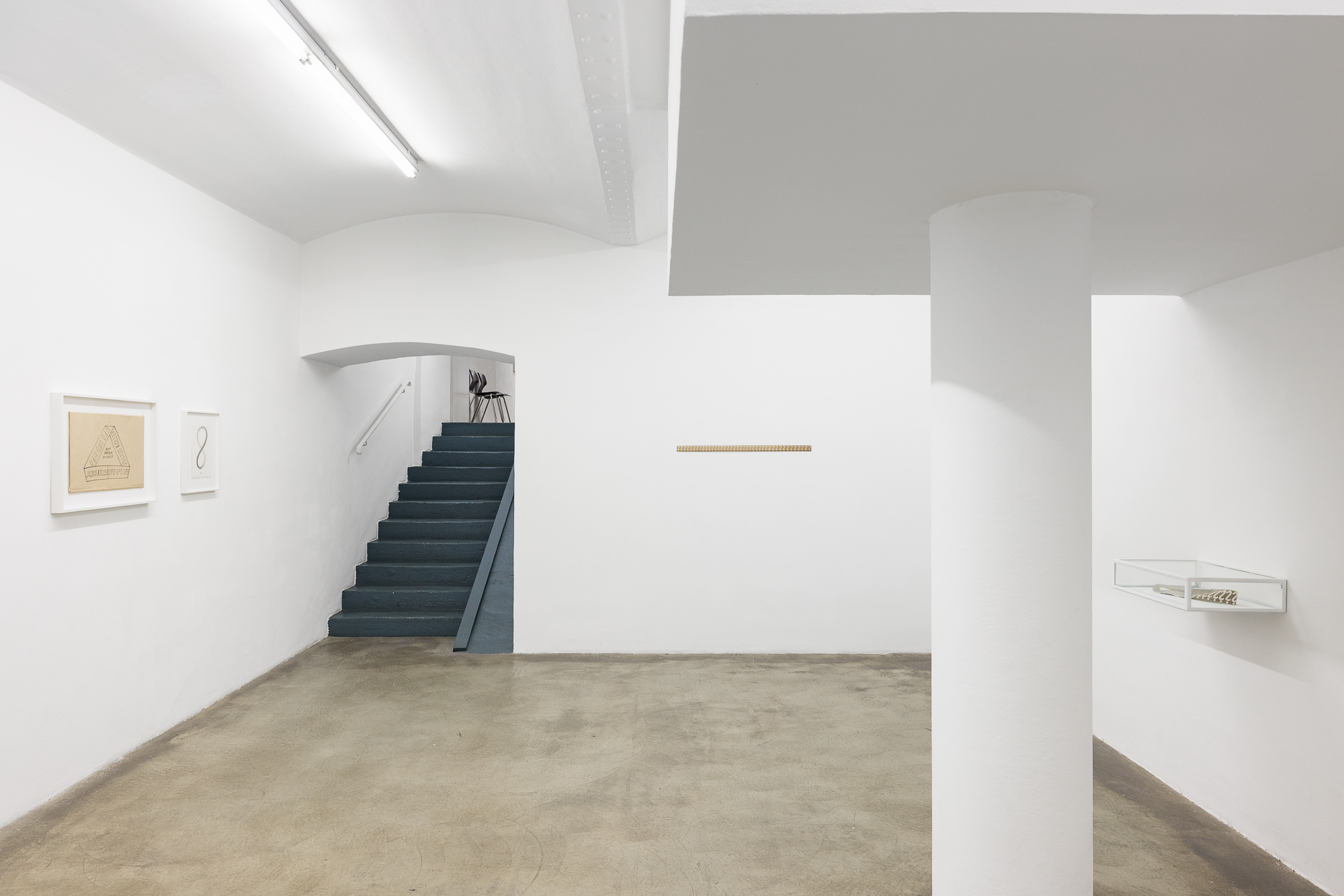
Exhibition view, Galerie Martin Janda, 2026
Photo: kunst-dokumentation.com
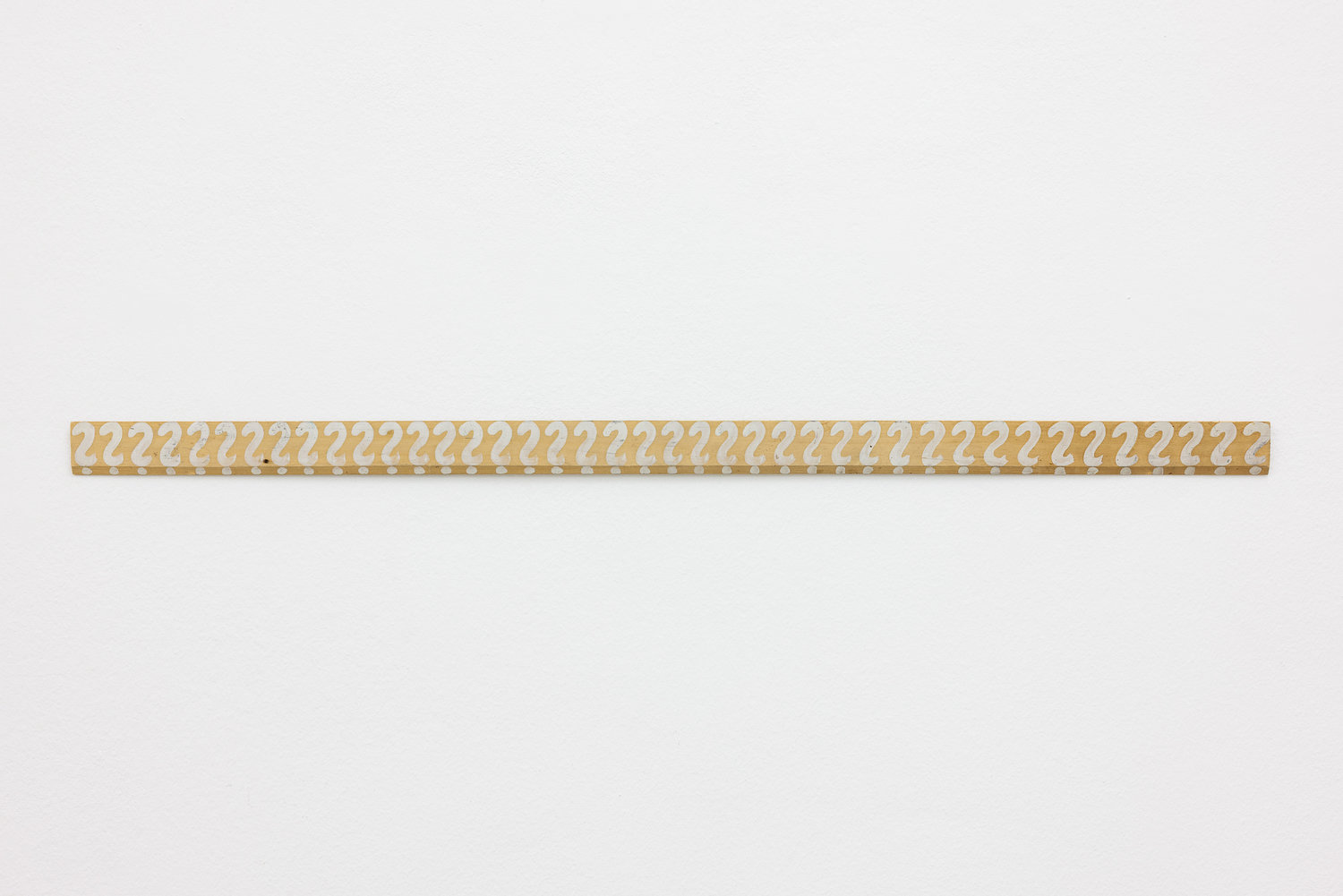
Július Koller, Otázniky 2, ca. 1989
latex on wood, 4.3 × 94.7 × 0.5 cm